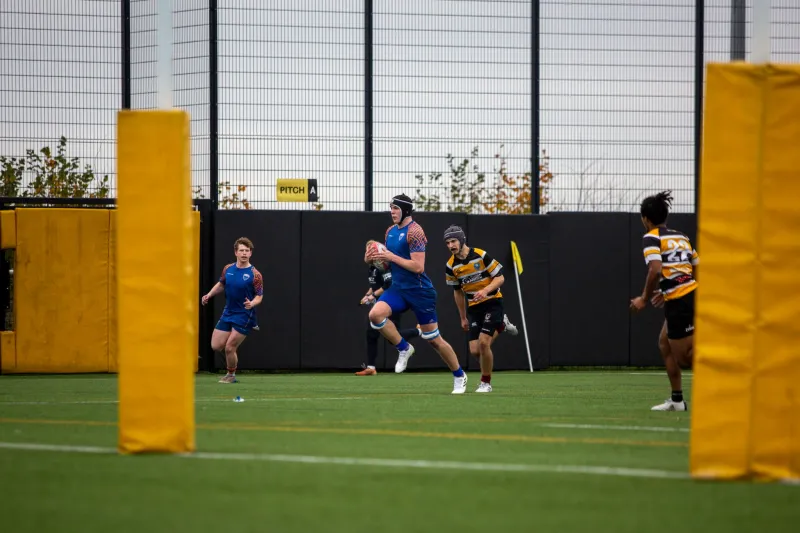
Alone at the Front: How America's Lone-Wolf Racing Culture Is Burning Out Its Athletes
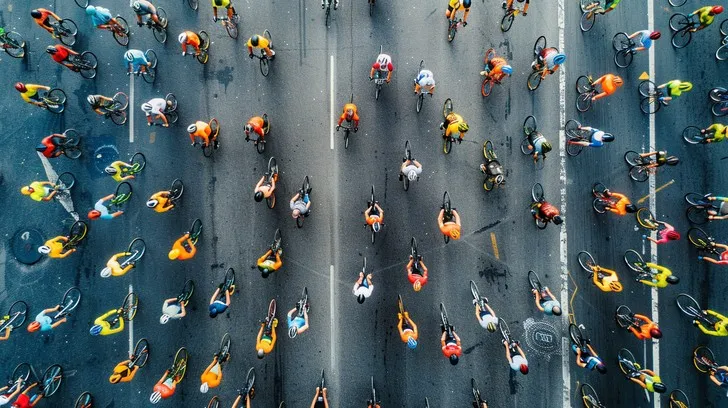
Photo: peloton of runners packed together in a road race aerial view, via images.stockcake.com
Watch a World Marathon Major and count how much of the race the leaders spend in single file. Now watch a typical American high school 3200 meters, or a youth soccer match, or a road relay — and notice how rarely anyone deliberately tucks behind anybody.
We have a drafting problem in this country. Not a lack of knowledge — every cycling and triathlon program drills it relentlessly, and draft-legal racing is the entire premise of short-course triathlon. The problem is that outside those bubbles, American athletes are raised to believe that running alone at the front is the only honest way to compete.
It's costing us.
What the Pack Is Actually Worth
The numbers behind drafting are not subtle. Research on group running has shown that running directly behind another athlete at typical distance-race speeds can reduce the metabolic cost of overcoming air resistance substantially — some studies peg the energy savings at several percent, which at the elite level translates to whole seconds per lap. Cyclists in a tight peloton can cut their power requirements by 20-40% depending on position.
In cycling, this isn't a secret; it's the sport. In American track, soccer, and basketball development, it's treated as a character flaw. We praise the kid who leads from the gun. We side-eye the kid who sits on a shoulder for 2000 meters and kicks.
The Cultural Root
Part of this is mythology. American sports culture runs on the lone hero — the breakaway, the buzzer-beater, the front-runner who refuses to lose. Sitting in the pack reads as weakness, as Drafting around here, the thinking goes, is something you do when you can't win on your own.
But look at how the rest of the world develops distance runners. East African training groups and European track circuits treat pack dynamics as core curriculum: who leads, for how long, and when to rotate. In soccer, the world game, off-ball movement and positional shielding are drilled from childhood. American youth soccer, by contrast, often devolves into a scrum where nobody runs to receive a pass into space because nobody was taught to use a teammate's movement as cover.
Where It Actually Shows Up on the Scoreboard
Consider the track relay. The second and third legs of a 4x400 are pure drafting opportunities — the incoming runner hands you momentum, and the athlete ahead of you gives you a body to hide behind. Yet how many American relays run their middle legs with athletes spread across the track, each paying full aerodynamic freight?
Or take distance running. The American record books are increasingly written by athletes who learned to sit, cover, and close — but the developmental pipeline still overproduces front-runners who blow up when the pack doesn't cooperate.
A Modest Proposal for Coaches
I'm not arguing we turn youth soccer into a pace line. But a few deliberate additions would go a long way:
- In track practice, run pack workouts on purpose. Assign positions, rotate the lead, make athletes feel what a shielded lap costs versus an exposed one.
- Teach the kick as a skill, not a personality trait. Sitting and closing is a trainable discipline with its own pacing logic.
- In team sports, drill off-ball positioning as energy management, not just tactical structure. Where you stand determines how much you run.
The best athletes in the world are not the ones who refuse help. They're the ones who know exactly when to take it. The pack isn't a hiding place. Used well, it's a fuel tank — and American sports would be smarter to teach kids how to fill it.