Bubble Season: The Indoor Track Habits That Ambush Athletes in March

Photo: indoor track and field meet banked track athletes racing, via c8.alamy.com
There's a moment every spring when indoor standouts become outdoor mysteries. The kid who ran 4:12 on the 200-meter banked board track in February shows up at the first outdoor meet and runs 4:19 into a light breeze on a flat 400-meter oval. Nothing about their fitness changed. Everything about their environment did.
Indoor track is a gift — northern programs would be lost without it. But climate-controlled comfort comes with a hidden invoice, and championship season in April is when it comes due. Here are the traps, and how to climb out of them.
1. The Banked Turn Illusion
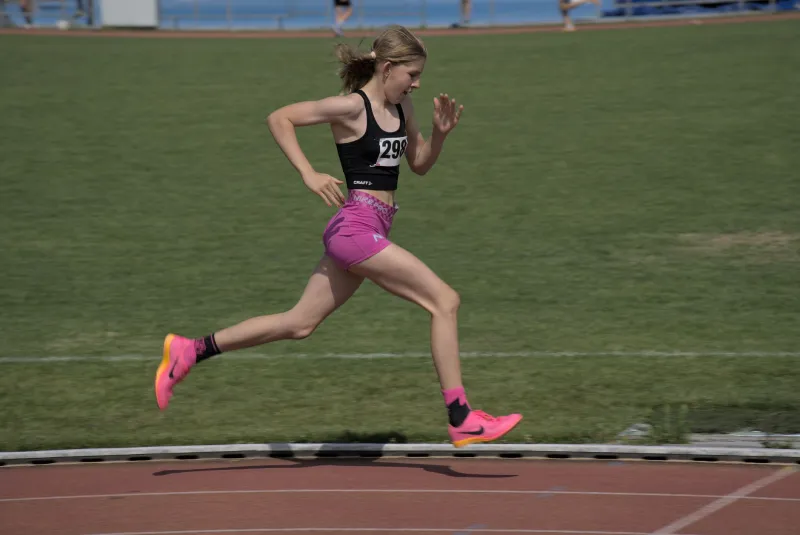
Modern indoor facilities with banked 200-meter tracks are engineering marvels, and they're fast for a reason: the tilt reduces the centripetal burden on athletes, especially in the outside lanes. But outdoor tracks are flat. Runners who spend an entire indoor season on a board track develop turn mechanics and confidence calibrated to a curve that won't exist outdoors.
The fix: in the final indoor block, shift quality sessions to flat-track facilities when possible, or deliberately practice outdoor-pace 200s on a flat surface. Even two weeks of re-calibration helps.
2. Zero Wind, Zero Skills
Indoor facilities are aerodynamically sterile. No headwind on the homestretch, no crosswind gusts, no tailwind to misread. That's wonderful for times and terrible for skill development. Wind management — leaning, drafting, adjusting stride into resistance — is a learned motor skill, and March is when outdoor runners discover theirs never developed.
The fix: build wind exposure into late-winter training. Get outside for at least one quality session a week in real conditions, even if it's ugly. Ugly and educational beats pretty and sheltered.
3. Stale Air and the Oxygen Question
Facility air quality is the least-discussed variable in indoor racing. Crowded field houses have elevated CO2 levels, and research on indoor air quality suggests degraded ventilation can measurably impair endurance performance. Athletes who only race indoors may never learn how their breathing responds in open, cold, fresh air — where respiratory patterns differ significantly.
The fix: cold-air running acclimation in the transition weeks, with attention to breathing rhythm. The first outdoor hard session shouldn't be the first time lungs meet 40-degree air.
4. The Temperature Comfort Zone
Sixty-eight degrees, year-round, is a performance dream and an adaptation dead zone. Outdoor championship season arrives with temperature swings of 30 degrees in a single day, sun, and humidity. Thermoregulation is trainable, but only with exposure.
The fix: progressive heat and cold exposure in the transition period. Hydration protocols practiced in training, not invented on race day.
5. Spikes and Surface Shock
Indoor board tracks and flat outdoor tracks load the legs differently. The bounce of a banked surface spares the calves and Achilles in ways grass-and-wind outdoor courses don't. Transition too abruptly and you get the classic early-spring injuries: calf strains, Achilles trouble, shin pain.
The fix: a two-to-three-week volume bridge, mixing surfaces and ramping outdoor-specific loading gradually. Boring advice, season-saving results.
The Bigger Picture
None of this argues against indoor season — it's indispensable, and indoor nationals are a legitimate championship in their own right. The argument is for intentionality. The best programs treat the indoor-to-outdoor transition as its own training phase, with its own goals, rather than a calendar formality.
The bubble is a great place to get fast. Just make sure you pack the skills you'll need on the outside before the door closes behind you.