Suits, Saddles, and Stopwatches: When the Corner Office Meets the Starting Line
The Guy Who Beat You at the Ironman Runs a Fortune 500 Company
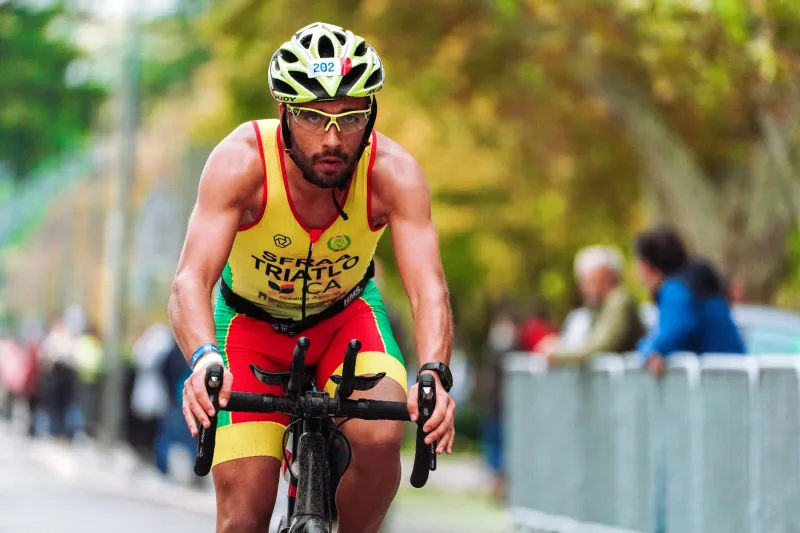
You trained for eight months. You woke up at 5 a.m. three days a week. You sacrificed weekends, social events, and more than a few slices of pizza. And then, somewhere around mile 18 of the run, a 54-year-old guy with a $40,000 custom triathlon bike and a team of three personal coaches blew past you like you were standing still.
Welcome to amateur endurance sports in 2024, where the competition isn't just other weekend warriors — it's a growing class of ultra-competitive American executives who've decided that dominating in the boardroom isn't quite enough anymore.
This isn't a small trend. Registration data from major Ironman events, gran fondo cycling races, and amateur motorsports series consistently show a rising proportion of participants listing executive or C-suite titles as their occupation. And these aren't people showing up to finish — they're showing up to podium.
The CEO Playbook, Applied to Sport
To understand why executives tend to be frighteningly good at endurance sports, you have to understand how they approach everything else in their lives.
"The same qualities that make someone effective in a high-pressure business environment are almost perfectly suited to endurance athletics," says Dr. Priya Sandhu, a sports psychologist who works with both corporate executives and competitive athletes. "Discipline, tolerance for discomfort, long-term planning, data analysis, delegation — those are the exact tools you need to train for and compete in a 140.6-mile race."
And then there's the budget factor, which is where things get complicated.
A mid-level amateur triathlete might spend $3,000 to $5,000 a year on gear, coaching, and race entries. A serious age-group competitor might push that to $15,000. A CEO competing at the same amateur level? The ceiling is effectively nonexistent. We're talking custom aero bikes fitted in private wind tunnels, GPS-tracked training plans built by coaches who normally work with Olympians, altitude tents in the bedroom, and nutritionists on retainer.
"I've worked with executives who have better performance infrastructure than some national team athletes," says Jake Moreno, a cycling coach based in Austin who splits his client roster between professional racers and high-net-worth amateurs. "The access to technology and expertise is just categorically different."
Motorsports: The Ultimate CEO Playground
If endurance sports are where executives compete, motorsports might be where they thrive.
Club racing series like the Porsche Club of America (PCA) track events, SCCA amateur racing, and various karting championships have long attracted wealthy hobbyists. But the level of seriousness — and investment — has escalated sharply in recent years.
Private coaching packages at professional racing schools run $10,000 to $25,000 for a weekend. Simulator time at high-end facilities — the same technology used to train professional IndyCar and NASCAR drivers — can be rented by anyone with the means to pay for it. And the cars themselves? An entry-level competitive spec racer might run $50,000. A well-prepared GT car for regional competition can exceed $200,000.
For an executive pulling down seven or eight figures annually, these are discretionary expenses. For the teacher, the nurse, or the mid-career engineer competing in the same class? They're prohibitive.
"There's a real tension in amateur motorsports right now," says Lena Hartwell, a regional SCCA competitor and automotive journalist who's written extensively about the sport's class dynamics. "The series are technically open to anyone, but the performance gap between someone with a $15,000 budget and someone with a $150,000 budget is enormous. They're not really competing on equal footing."
The Psychology of the Ultra-Competitive Executive
So why do it? These are people who've already won, by most conventional measures. Why spend weekends suffering through 100-mile bike rides or grinding around a track in 90-degree heat?
Sandhu has a theory, and it's more nuanced than simple ego.
"A lot of executives operate in environments where success is ambiguous," she explains. "A quarterly earnings report is shaped by hundreds of variables outside your control. A race result is not. You cross the line. There's a time. There's a rank. For people who are wired to achieve and measure, that clarity is incredibly appealing."
There's also the identity dimension. As corporate culture increasingly prizes the whole person — the executive who runs marathons, who competes in triathlons, who races on weekends — athletic achievement has become a form of personal branding. It signals discipline, resilience, and the kind of competitive fire that boards and investors like to see in the people running their companies.
"I've heard executives say they mention their race results in investor meetings," Moreno says with a slight laugh. "It's a signal. 'I'm the kind of person who does hard things.' It's marketing."
Is It Unfair? The Amateur Athletics Equity Debate
Here's the uncomfortable question lurking underneath all of this: does wealth-driven performance advantage undermine the integrity of amateur competition?
Opinions are genuinely split.
On one hand, amateur sports have never been truly equal. Talent varies. Training time varies. Geography matters. The kid who grows up near a velodrome has advantages the kid in rural Kansas doesn't. This is nothing new.
On the other hand, the scale of the advantage available to a resource-unlimited competitor has expanded dramatically as sports technology has matured. When the performance gap between a $500 bike and a $15,000 bike is measurable in minutes over a long course, money isn't just an advantage — it's a substitute for a portion of athletic talent.
"Age group categories were designed to level the playing field by grouping people of similar physical capacity," says Hartwell. "They weren't designed to account for a $40,000 equipment differential within the same age bracket. The governing bodies are going to have to grapple with this."
Some already are. Certain triathlon series have begun experimenting with equipment-capped categories, similar to how some running races have introduced shoe regulations. Motorsports organizations have long used class systems to separate cars by specification. But enforcement is imperfect, and the pressure from well-funded competitors — who also happen to be major sponsors and vocal community members — complicates the picture.
What It Says About American Sports Culture
Zoom out, and this trend tells us something interesting about where American sports culture is heading.
The lines between professional performance methodology and amateur participation are dissolving. The tools once reserved for elite athletes — wind tunnels, power meters, lactate testing, biomechanical analysis — are increasingly accessible to anyone with the resources to pay for them. And in a culture that celebrates optimization, data, and competitive excellence across every domain, it makes sense that high-achievers would apply those same values to their athletic pursuits.
The CEO on the starting line isn't just a curiosity. They're a reflection of a broader cultural moment — one where the pursuit of speed and performance has become a language that business and sport now speak together.
Whether that's good for amateur competition is a separate question. But it's definitely making the podium a lot harder to reach.