Punished by the Elements: Why Bad Weather Is the Best Coach You're Not Using
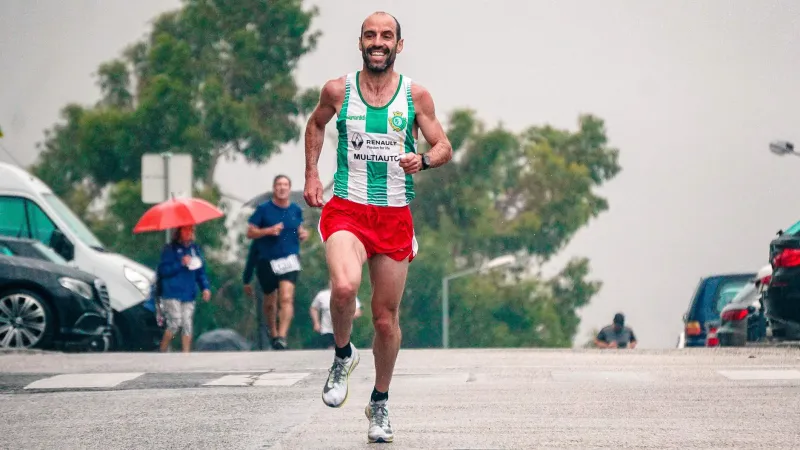
Here's a scene that plays out at tracks and cycling paths all across America every week: the forecast calls for gusty winds and scattered showers, and recreational athletes cancel. They reschedule. They hit the treadmill instead, or skip the session entirely. Meanwhile, somewhere across town — or across the country — a Division I sprinter is pulling on a rain jacket and heading straight into the mess on purpose.
That gap in behavior? It's not just about mental toughness. It runs a lot deeper than that, and it shows up directly in race results.
What Wind Actually Does to Your Body
Most people think of wind as an inconvenience. Elite athletes think of it as a training variable. There's a meaningful difference between those two mindsets, and it starts with understanding what's actually happening when air resistance fights back against a moving body.
At any running speed above a slow jog, aerodynamic drag becomes a real factor. Studies have consistently shown that a headwind of just 10 mph can add several tenths of a second to a 100-meter sprint — not a huge number in isolation, but significant when you're talking about races decided by hundredths. Cyclists feel it even more acutely. A 20 mph headwind can effectively double the power output required to maintain race pace.
When you train in those conditions regularly, your body and your mechanics start to adapt. And those adaptations don't disappear when the weather clears.
The Aerodynamic Calibration That Happens in the Storm
Here's where it gets interesting from a pure physics standpoint. When athletes train against wind resistance consistently, they're forced to make real-time biomechanical adjustments — leaning into the resistance, tightening their arm swing, lowering their center of gravity, reducing frontal surface area. These aren't conscious decisions. They're survival instincts that the body gradually learns to automate.
Sprinters who log sessions in windy conditions tend to develop a more compact, forward-leaning stride that minimizes drag exposure. Cyclists who train in crosswinds get remarkably good at micro-adjustments in their torso angle and hip positioning. Football receivers running routes in a gusty Midwest October learn to time their cuts differently, accounting for how the wind shifts their body's momentum mid-stride.
None of that learning happens on a treadmill. None of it happens on a perfectly still morning at your local track.
The Comfort Trap Nobody Warns You About
This is the part that should make recreational athletes genuinely uncomfortable: perfect training conditions might actually be a disadvantage.
When you only ever train in controlled, calm environments, your body gets very good at performing in controlled, calm environments. Your mechanics get dialed in for zero-resistance scenarios. Then race day arrives — and in the real world, race days bring real weather. A 2022 Boston Marathon saw gusting headwinds that shredded finishing times across the board. The Chicago Marathon regularly battles lake-effect winds off Lake Michigan. Outdoor track and field events at the collegiate and professional level happen rain or shine.
Athletes who've never practiced adjusting on the fly get rattled. Their form breaks down earlier. Their pacing strategy falls apart. They weren't unprepared for the distance or the effort — they were unprepared for the environment.
Elite coaches call this "condition specificity," and it's a foundational principle in high-level training design. You train for what you're going to face, not for what's most comfortable.
How the Pros Actually Structure Bad-Weather Sessions
Deliberately training in adverse weather isn't as simple as just going outside when it's ugly. Professionals and their coaching staffs are strategic about it.
Cyclists on elite road teams will schedule crosswind sessions specifically to practice echelon riding — the diagonal drafting formation that becomes critical when a race hits an exposed stretch of road with side winds. These aren't optional rides. They're mandatory skill-building blocks built into the training calendar months before the racing season.
Sprinters at programs like the Olympic Training Center in Colorado Springs incorporate wind-resistance training through a combination of parachute harnesses and actual outdoor exposure. The goal isn't just to build strength — it's to teach the nervous system what efficient form feels like under load, so it can replicate that efficiency when the load disappears.
Football programs in the Big Ten and SEC routinely practice in late October and November weather that mirrors what they'll face in rivalry games and bowl season. Nick Saban famously treated late-season weather practice as a competitive preparation tool, not a hardship to be managed around.
The common thread across all of these? Weather isn't treated as an obstacle. It's treated as a coaching tool.
Crosswinds, Specifically, Are a Different Beast
Straight headwinds are tough but predictable. Crosswinds are where things get genuinely complicated — and genuinely useful as a training stimulus.
A crosswind doesn't just slow you down; it destabilizes you. It pushes laterally against your body, forcing constant micro-corrections in balance and positioning. For a cyclist, this means fighting to hold a line without drifting into a teammate or a gutter. For a sprinter, it means the force on their body is asymmetrical, requiring one side to compensate more than the other. For a wide receiver running a crossing route, it means the ball's flight path is altered and their own momentum is being nudged off the intended line.
Training in crosswind conditions builds what sports scientists sometimes call "dynamic stability" — the ability to maintain efficient mechanics when the environment is actively working against you. It's a quality that simply cannot be replicated indoors, and it separates athletes who look great in practice from athletes who perform when it counts.
What This Means for the Recreational Athlete
You don't need to be an Olympian to take something useful from this. If you're a runner training for a spring half marathon in a city like Chicago, Dallas, or Denver — places where wind is a genuine race-day factor — your training plan should include some intentional outdoor sessions in conditions that aren't ideal.
That doesn't mean being reckless. Lightning, ice, and extreme cold are legitimate reasons to move indoors. But a blustery 45-degree Saturday morning in March? That's not a reason to skip the long run. That's an opportunity.
Start paying attention to what happens to your form when the wind picks up. Does your stride get choppy? Do your shoulders rise and tighten? Does your pace drop more than it should? Those are signals — useful data points about where your mechanics break down under real-world pressure.
The athletes who figure that out in training are the ones who don't fall apart on race day.
The Takeaway
Bad weather has always been part of sport. It's baked into the outdoor competitive experience in a way that no amount of climate-controlled gym time can fully prepare you for. The athletes who treat ugly conditions as an inconvenience are leaving genuine performance gains on the table. The ones who treat those conditions as a training partner — one that pushes back harder than any coach can — are the ones who show up to the starting line genuinely ready for whatever the day brings.
Next time the forecast looks rough, don't cancel. Dress for it. Get out there. The wind isn't working against you — it's working on you.