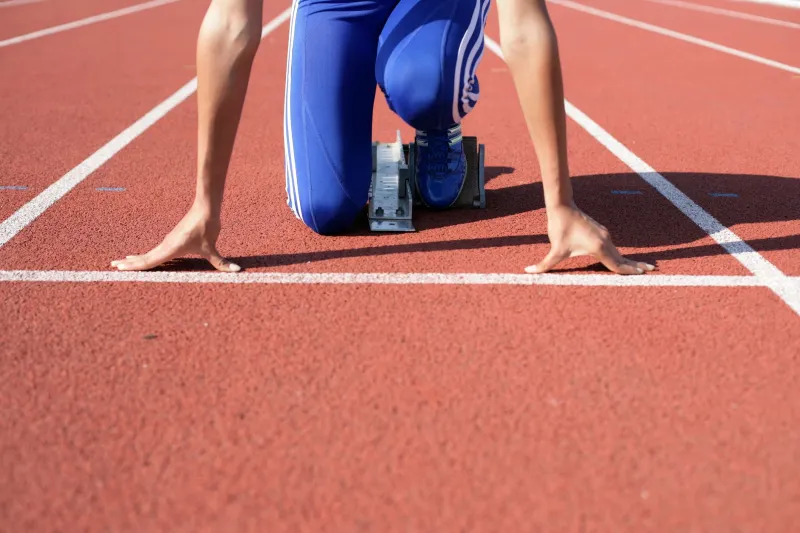
Wet and Slow: The Sweat Science That's Quietly Costing Athletes Precious Seconds

You've dialed in your nutrition. Your training block is on point. You even splurged on a new pair of race-day kicks. But the moment your body starts doing what bodies inevitably do — sweat — a performance variable kicks in that almost nobody in your training circle is talking about.
Moisture. And what it does to the air moving around you.
This isn't a niche concern for wind tunnel engineers. It's a real, measurable drag penalty that affects runners, cyclists, triathletes, and even team sport athletes. The gap between managing sweat well and ignoring it entirely can be the difference between a PR and a frustrating near-miss.
The Physics Nobody Puts on a Poster
Here's the basic problem. When sweat saturates your clothing, the fabric stops behaving like a smooth, aerodynamic surface and starts behaving like a wet sponge. A soaked cotton t-shirt, for example, can increase fabric weight by 10 to 15 percent during a hard effort — and that added mass clings differently to the body, creating irregular surface textures that disrupt airflow.
In aerodynamics, surface texture matters enormously. Smooth surfaces allow airflow to remain attached longer, reducing pressure drag. Rough or irregular surfaces — like waterlogged fabric bunching at the arms or torso — create turbulence earlier, essentially expanding the athlete's effective drag profile.
Skin-level moisture adds another layer to this. Heavy sweating on exposed surfaces like arms and legs changes the skin's coefficient of friction with moving air. It's subtle, but at race pace — especially in cycling, where athletes spend extended time cutting through air at 20-plus mph — subtle adds up fast.
The Triathlete's Double Whammy
Triathletes arguably take the biggest hit here. Coming out of the swim, athletes are already soaked, and the transition into the bike leg means carrying that moisture load right into the most aerodynamically demanding portion of the race. A saturated tri-suit doesn't just feel uncomfortable — it's actively working against you.
Research in sports engineering has shown that wet versus dry fabric can shift drag coefficients by anywhere from 2 to 8 percent depending on the material and fit. For a 40-kilometer bike leg, even a conservative estimate of added drag translates to real, clock-measurable time losses.
Amateur triathletes often shrug at this because they assume it affects everyone equally. It doesn't. Athletes using moisture-wicking, fast-drying technical fabrics shed that water weight far more quickly than those in generic athletic wear — and they return to a lower-drag surface profile while competitors are still riding soaked.
What Elite Athletes Are Actually Doing
At the professional level, sweat management has become a legitimate performance category. The approach breaks down into two interconnected strategies: fabric selection and hydration architecture.
On the fabric side, elite athletes and their gear sponsors have moved decisively toward textiles engineered to pull moisture away from the skin surface and disperse it across a wider area for faster evaporation. These aren't just marketing terms. Fabrics using hydrophobic yarn constructions — where individual fibers are coated or chemically treated to repel water — genuinely outperform standard polyester blends in moisture evacuation speed.
The fit dimension is equally important. Compression-style garments that stay flush against the skin don't give sweat-soaked fabric room to sag or bunch. That consistent surface profile maintains aerodynamic integrity throughout the effort, rather than degrading as fatigue and perspiration accumulate.
Hydration strategy connects to this in a less obvious way. Athletes who front-load fluids and electrolytes effectively — particularly sodium, which governs how much the body sweats to maintain cooling — can reduce total sweat output without compromising thermoregulation. Less sweat volume means less saturation, less drag penalty, and less weight accumulation over a long effort.
The Affordable Fix vs. The Marketing Hype
Here's where things get practical — and a little frustrating for anyone who's stood in a sporting goods store trying to decode fabric technology labels.
The honest truth is that mid-range technical fabrics from brands like Nike Dri-FIT, Under Armour HeatGear, and comparable offerings from Patagonia and Brooks perform genuinely well at moisture management. Independent textile testing has repeatedly shown diminishing returns above a certain price point. A $35 moisture-wicking running shirt from a reputable mid-tier brand often performs comparably to a $120 version in terms of drying speed and surface texture maintenance under sweat load.
Where premium pricing does pay off is in precision fit and seam construction. High-end race-day garments are cut to maintain aerodynamic profiles under movement and moisture stress in ways that off-the-shelf options aren't. If you're a competitive age-grouper chasing podium spots, that investment has a real return. If you're running your first half-marathon or cycling centuries for fitness, the mid-range option covers you well.
What doesn't work: cotton. Full stop. Cotton absorbs and holds moisture, adds weight, and creates exactly the kind of surface irregularities that drag penalties feed on. If you're still training in cotton tees, you're leaving aerodynamic performance on the table before you've even started worrying about form or pacing.
The Overlooked Skin Factor
One area that even performance-focused athletes tend to ignore is exposed skin itself. Arms, legs, and the neck and face all contribute to overall drag — and all become wetter as effort intensifies.
Some elite cyclists and swimmers have experimented with skin-surface treatments, including textured compression sleeves that actually use the golf ball dimple principle to manage airflow more efficiently over wet skin. These remain niche products, but the underlying concept is sound.
For most athletes, though, the practical takeaway is simpler: keep exposed skin to a minimum during high-speed efforts. Arm sleeves and compression calf guards aren't just for warmth or recovery signaling — when made from technical fabrics, they replace an unpredictable wet skin surface with a consistent, engineered one.
Small Variable, Real Results
No single tweak is going to shave minutes off your time. But aerodynamic performance is almost always the product of stacking small gains — and sweat management is one of the cleaner, more accessible variables available to athletes at every level.
The elite field figured this out quietly while the rest of us were focused on shoes and supplements. Gear that handles moisture well, a hydration plan that keeps sweat volume manageable, and some attention to what your clothing is actually doing at race pace — that combination costs less than most people spend on a single pair of performance shoes.
Speed lives in the details. This one just happens to be invisible until you know what to look for.