When Your Body Stops Cutting Through Air: The Fatigue-Drag Connection Nobody Talks About

Everybody knows fatigue slows you down. Your lungs burn, your legs turn to concrete, and your pace drops. That part isn't news. What most athletes — even serious, data-obsessed ones — don't fully appreciate is that fatigue isn't just a metabolic problem. It's an aerodynamic one too.
As muscles tire, your posture breaks down. Your shoulders creep forward. Your head drops. Your hips sag or rotate out of alignment. Each of those shifts, small as they seem in the moment, changes the shape your body presents to the air rushing past you. And that change costs speed — not in a vague, hard-to-measure way, but in a documented, quantifiable drag penalty that researchers are only beginning to fully map.
The Physics of a Tired Body
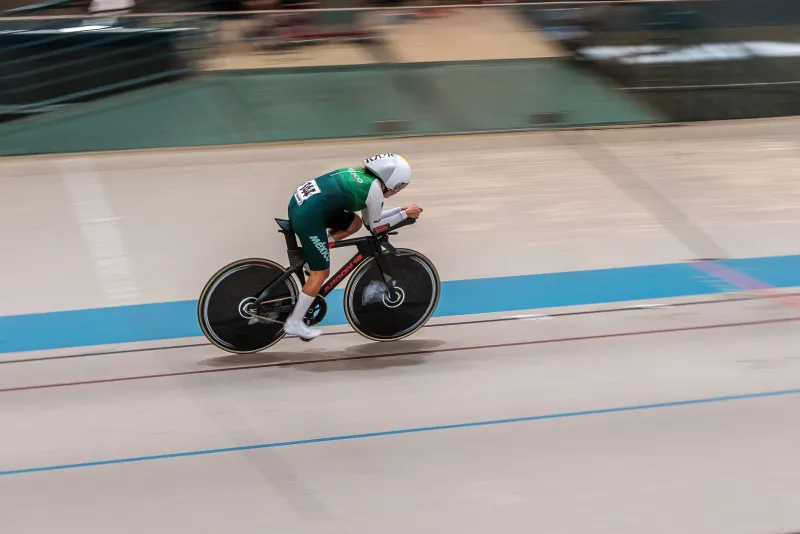
To understand why this matters, you need a quick refresher on aerodynamic drag. Drag force is proportional to the frontal area you're presenting and your drag coefficient — essentially how streamlined your shape is. Elite athletes in speed-dependent sports spend enormous effort optimizing both. Cyclists tuck their torsos. Sprinters work on their lean angle. Swimmers obsess over their body line.
All of that optimization assumes you're in control of your form. Fatigue removes that assumption.
Studies tracking cyclists during time trials have shown frontal area increases of anywhere from 3 to 8 percent in the final third of a race compared to the opening miles, purely due to postural changes. For a cyclist averaging 25 mph, that kind of drag increase can translate to 15 to 30 additional watts of power required just to maintain the same speed — watts that, by that point in the race, they simply don't have.
Runners face a similar problem. Research published in sports biomechanics journals has consistently shown that as runners fatigue past the 60 to 70 percent mark of a maximal effort, forward lean decreases, arm swing widens, and stride mechanics shift in ways that increase both vertical oscillation and frontal profile. You're not just running less efficiently in the muscular sense. You're running less efficiently in the aerodynamic sense, simultaneously.
The Compensation Spiral
Here's where it gets compounding. When one muscle group tires, the body compensates by recruiting others. A fatigued core, for instance, leads to excessive hip rotation. Excessive hip rotation widens the body's lateral profile and disrupts the clean, narrow shape that minimizes drag. The compensating muscles then tire faster because they weren't built for that workload, leading to further breakdown — and further aerodynamic penalty.
Sports scientists call this the compensation spiral, and it's particularly brutal in longer events. Think about the back half of an Ironman run, or miles 18 through 26 of a marathon. Athletes who looked textbook-clean at the start are visibly collapsing into inefficient movement patterns. Some of that is pure physiology. But a meaningful chunk of the performance drop is aerodynamic drag that their compromised posture is generating.
Swimmers aren't immune either. Body rotation and head position in open water events degrade significantly with fatigue, increasing drag at the one moment — the final stretch — when every fraction of a second counts most.
Your Peak Performance Window Is Shorter Than You Think
This is the uncomfortable truth the data keeps pointing toward: the window in which your body is truly aerodynamically optimized is narrower than most athletes plan for. You might assume your form stays sharp through the first half of your event, but biomechanical monitoring suggests postural degradation often begins earlier — sometimes within the first 20 to 25 percent of a maximal effort — and accelerates sharply after that.
For American endurance athletes especially, where events like gran fondos, triathlons, and road marathons are booming in popularity, this is a planning problem as much as a training one. You're not just racing your fitness. You're racing the clock on your own aerodynamic efficiency.
What You Can Actually Do About It
The good news is that this isn't purely a fatigue problem — it's partly a training specificity problem, and that's fixable.
Train the positions, not just the effort. Aerodynamic form needs to be practiced under fatigue, not just when you're fresh. If you're a cyclist, your late-race aero position should be drilled during the hardest intervals of your training blocks, when holding form feels nearly impossible. That's the adaptation you need.
Prioritize anti-fatigue core work. The core is the anchor of aerodynamic posture. When it goes, everything goes. Exercises that specifically target endurance in the stabilizing muscles — think long-duration planks, Pallof press variations, and loaded carries — build the kind of fatigue resistance that keeps your torso from caving when it matters most.
Use video and data to find your personal breakdown point. Most athletes have no idea when their form starts degrading because they can't see themselves mid-race. Recording training efforts and reviewing them afterward — or using power and pace data to identify where output drops disproportionately — can help you pinpoint your own aerodynamic cliff. Once you know where it is, you can target it.
Race strategy matters more than you think. If your aerodynamic breakdown accelerates sharply at the 70 percent mark of your effort, your pacing strategy should account for that. Going out slightly more conservatively to preserve form longer can actually produce faster finish times than burning your aerodynamic efficiency early.
Refresh your form with deliberate cues. Elite athletes use in-race form cues — a quick mental check of shoulder position, head angle, or elbow width — to interrupt compensation patterns before they spiral. Building a short cue routine into your race plan costs nothing and can measurably extend your efficient performance window.
The Bigger Picture
Sports technology has given us incredible tools for measuring physiological fatigue — heart rate variability, lactate threshold testing, VO2 max data. But the aerodynamic cost of fatigue has largely flown under the radar for most amateur athletes, even as it quietly drains their results.
The truth is, speed in endurance sport is a two-variable problem: how much power or force you can generate, and how efficiently that effort moves you through the environment. Most training addresses the first variable obsessively while ignoring the second. Fatigue attacks both — and the aerodynamic hit often lands harder and faster than athletes expect.
Your best performance window isn't just limited by your lungs and legs. It's limited by how long your body can hold the shape that lets you cut cleanly through the air. Train for that, and you might be surprised how much time you've been leaving behind.