The Hip Extension Blind Spot: What Your Trainer Isn't Measuring and Why It's Slowing You Down

You've logged the reps. You've done the agility ladder. You've watched the film. And yet, something still feels stuck when you try to explode laterally across the court. The gap between your effort and your output isn't in your head — it might literally be in your hips.
Specifically, it's in a measurement almost no one bothers to take: your hip extension angle at the moment of push-off.
What Hip Extension Actually Does (And Why It's Different From Hip Flexion)
Most gym programs hammer hip flexors — the muscles that pull your leg forward. That makes sense for running straight lines. But court sports like basketball and tennis live and die in the lateral plane, and that's where hip extension — the backward drive of the leg — becomes the unsung engine of speed.
When you push off to change direction, your glute max and hip extensors fire to generate force against the ground. The angle at which your hip reaches full extension determines how much of that force actually propels you sideways versus just lifting you upward. A restricted hip extension range means you're essentially pushing at the wrong angle — like trying to accelerate a car while the wheels are slightly crooked.
Biomechanists refer to this as the "hip extension moment arm," and when it's compromised, you lose ground reaction force efficiency. Translation: you work harder, move slower, and your body compensates in ways that create drag throughout the entire kinetic chain.
The Invisible Drag Nobody's Talking About
Here's where it gets interesting from an aerodynamic standpoint. When your hip extension is limited, your torso tends to pitch forward to compensate. That forward lean changes your body's cross-sectional profile during lateral movement — essentially increasing the surface area your body presents during those explosive cuts and shuffles.
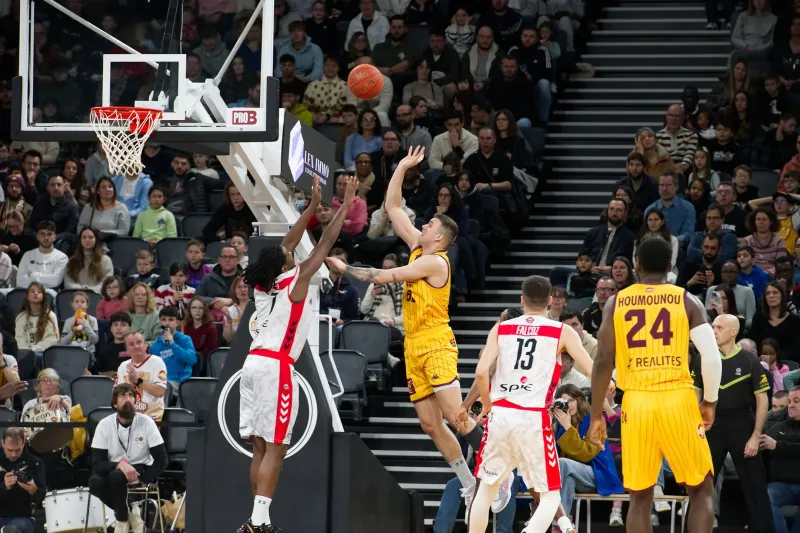
At the speeds elite athletes operate, even subtle postural shifts create measurable resistance. Think of it like a swimmer's body position: a slight angle change disrupts the streamline and costs time. On a basketball court, that same principle applies during every defensive slide, every drive to the basket, every split-step recovery in tennis.
Professional athletes with optimized hip extension move with what coaches often describe as a "low, flat" quality — they're compact, efficient, and harder for the air to push back against. Athletes with restricted extension tend to look upright and choppy, which isn't just an aesthetic difference. It's a physics problem.
How the Pros Are Doing It Differently
Watch Steph Curry's defensive positioning closely. His hips sit back and low, but his torso stays remarkably upright. That's not just good coaching — that's the product of elite hip extension range allowing him to generate lateral force without compensating through his spine.
In tennis, look at how Carlos Alcaraz loads into his groundstrokes and then explodes toward the net. The trail leg drives into full extension behind him, creating a long lever that converts stored energy into forward burst. Restrict that extension even 15 degrees and you've fundamentally changed the physics of that movement.
Performance coaches at the NBA and ATP level now routinely screen hip extension as part of movement assessments, particularly during combine prep and pre-season physicals. It's not a new concept in elite circles — it's just rarely communicated down to the recreational and semi-pro level where most athletes train.
The Three-Minute Self-Assessment You Can Do Right Now
You don't need a motion capture lab to get a rough read on your hip extension. Here are three simple tests you can do at home or in the gym:
The Thomas Test (Modified) Lie on your back at the edge of a bench or table. Pull one knee to your chest and let the other leg hang freely. If the hanging leg drops below the horizontal plane of the table, your hip flexors on that side are tight, which directly limits extension on the opposite side during push-off. If the leg stays elevated, you've found a restriction worth addressing.
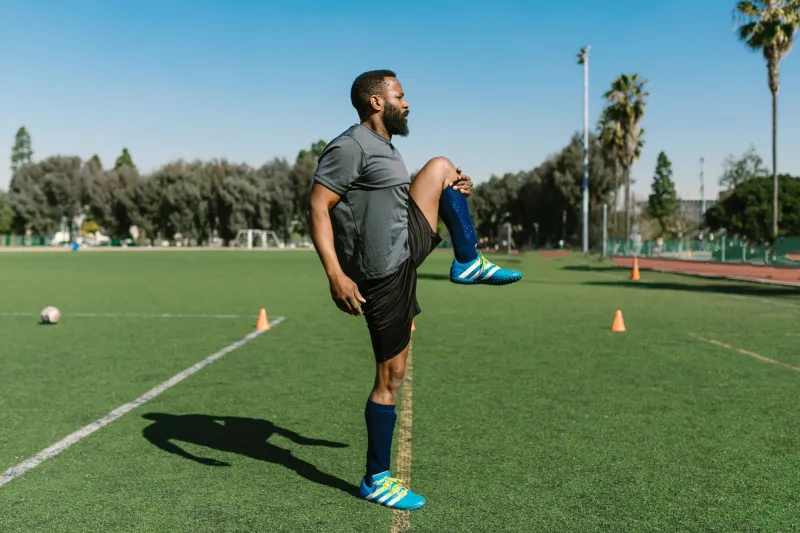
The Wall Hip Extension Screen Stand facing a wall with your hands lightly touching it for balance. Drive one knee up to hip height, then slowly extend the same leg straight back behind you. Your goal is to reach roughly 20 degrees of extension past neutral (straight up and down) without your lower back arching excessively. If you can't get there without your back compensating, your hip extensors are likely the limiting factor.
The Lateral Push-Off Video Test Record yourself performing a lateral shuffle at full speed from a side angle. Pause the video at the moment your push-off foot leaves the ground. Is your trail leg reaching a clean extension behind you? Or is your foot leaving the floor while your knee is still bent significantly and your hip barely past neutral? That angle tells you a lot.
What to Do If You're Restricted
The good news: hip extension range responds well to targeted work. A combination of hip flexor stretching (particularly the rectus femoris and iliopsoas), glute activation drills, and single-leg hip extension exercises under load can produce noticeable changes within four to six weeks.
Couch stretches, RKC planks, and cable pull-throughs are all tools worth adding to your warm-up and accessory routine. The goal isn't just flexibility — it's teaching your nervous system to access and use that range under the high-speed, high-force conditions of actual competition.
For athletes training in basketball or tennis specifically, incorporating lateral bounding drills that emphasize full extension at push-off can help ingrain the pattern once the mobility is there.
The Measurement Your Trainer Should Be Taking
If you work with a trainer or strength coach, ask them to screen your hip extension range as part of your next movement assessment. It's a two-minute test that could completely reframe how your program is designed. The athletes who close the gap between their training effort and their on-court output are usually the ones who found a small, overlooked inefficiency and fixed it.
Hip extension isn't glamorous. It won't show up on a highlight reel. But in a sport where half a step separates a blocked shot from a layup, or a first-step advantage wins the point, it might be the most valuable angle nobody's measuring.