Rocky Mountain High Performance: Why a Train Ticket to Colorado Beats a $50,000 Altitude Pod

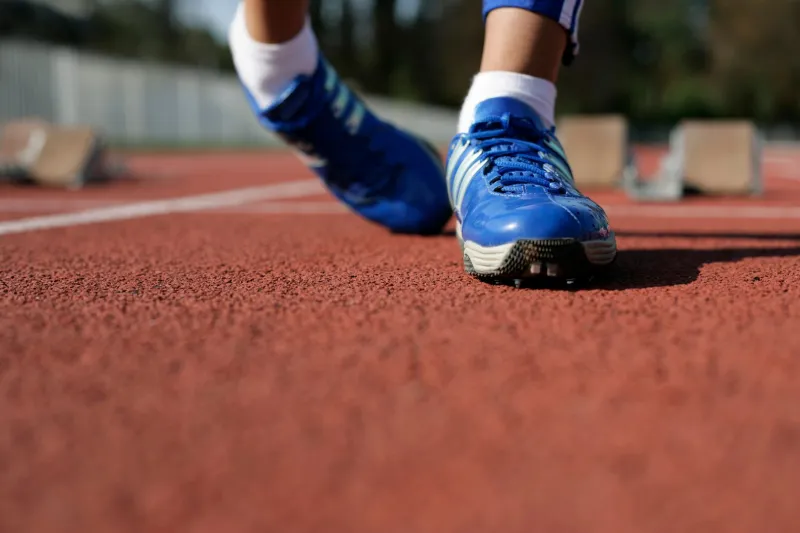
Photo by Photo by FilterGrade on Unsplash on Unsplash
Somewhere in the Colorado Springs area, a cross country runner is finishing a tempo run at 6,000 feet above sea level. She doesn't have access to a hyperbaric chamber. Her program's annual budget wouldn't cover the monthly lease on the altitude simulation tents that some pro cycling teams use. What she does have — and what's doing the heavy physiological lifting — is geography. And it turns out that's enough.
Altitude training has been a legitimate fixture in elite sports science for decades. But somewhere along the way, the conversation got hijacked by expensive technology. Altitude tents. Hypoxic chambers. Normobaric simulation systems that can run $30,000 to $50,000 or more. The marketing premise is compelling: bring the mountain to the athlete. The reality, according to a growing body of research and the track records of programs in America's mountain states, is that the mountain does it better.
What Elevation Actually Does to Your Body
Let's start with the physiology, because it's genuinely fascinating and often oversimplified in popular coverage.
At sea level, the air you breathe is approximately 21% oxygen. That percentage doesn't change much with altitude — what changes is the partial pressure of that oxygen, meaning the air is less dense and each breath delivers fewer oxygen molecules to your lungs. Your body, being the remarkably adaptive system it is, responds to this by triggering a cascade of physiological changes designed to compensate.
The most talked-about response is erythropoietin production — EPO, the same hormone that made headlines in professional cycling for less legitimate reasons. Your kidneys release more of it at altitude, which stimulates increased red blood cell production. More red blood cells means more oxygen-carrying capacity in the blood. Come back down to sea level and you're suddenly running with an engine that's been tuned for thinner air in an environment with more fuel. That's the performance edge.
But EPO and red blood cell count are only part of the story. Altitude training also drives improvements in mitochondrial density — essentially increasing the number of energy-producing units inside muscle cells. It improves the efficiency of oxygen utilization at the cellular level. It enhances buffering capacity, which helps athletes manage lactic acid accumulation during high-intensity efforts. And it appears to improve running economy — the metabolic cost of moving at a given pace — in ways that persist for weeks after returning to lower elevation.
The Sweet Spot Nobody's Talking About
Here's where it gets interesting for American athletes who aren't training at the Olympic Training Center: the most effective altitude range for triggering these adaptations isn't the extreme heights you might associate with mountaineering. It's a surprisingly accessible window.
Research consistently points to elevations between roughly 7,000 and 9,000 feet as optimal for the "live high, train low" model — spending most of your time at elevation while doing the hardest training sessions at lower altitude to preserve workout quality. But significant adaptations begin occurring at elevations as low as 2,000 to 5,000 feet, a range that covers a huge swath of the American West and parts of the Intermountain region.
That means Albuquerque (5,300 feet), Salt Lake City (4,300 feet), Denver (5,280 feet), Flagstaff (6,900 feet), and dozens of smaller cities and towns across the region are sitting in or near the performance sweet spot. Not as exotic research destinations — as home. Athletes in these communities are getting a baseline altitude stimulus simply by living their normal lives.
This is the altitude advantage that almost nobody in the national sports conversation is talking about. It's not a hack. It's not a workaround. It's a legitimate, well-documented physiological benefit that's available to any athlete willing to relocate or train strategically in these regions — and it costs roughly the price of a moving truck or a road trip.
Programs That Figured This Out Years Ago
The University of New Mexico's track and cross country programs have been leveraging Albuquerque's elevation for decades. Their distance athletes train at an altitude that would require a five-figure equipment investment to replicate artificially, and they do it as a baseline condition of simply showing up to practice.
Flagstaff, Arizona has become one of the most respected training destinations in American distance running precisely because its elevation profile is nearly ideal. Elite runners from across the country — and around the world — pay to come train there. Local programs have had that advantage baked in from the beginning.
Colorado State, Adams State, and several smaller programs in the Rocky Mountain Athletic Conference have built consistent national-level distance running programs on the back of geographic altitude access. Adams State, a small school in Alamosa, Colorado — elevation 7,500 feet — has produced a remarkable concentration of elite distance runners relative to its enrollment and budget. The altitude isn't the only factor, but dismissing it would be scientifically naive.
What these programs share isn't a massive gear budget or cutting-edge simulation technology. They share zip codes.
The Simulation Gap
So what's wrong with the hyperbaric tents and altitude chambers? Nothing, exactly. They work. The physiological mechanisms are real and the research supports their effectiveness in controlled settings.
The problem is the gap between laboratory conditions and practical reality.
Altitude simulation technology works best when athletes spend extended periods — ideally 12 to 16 hours per day — in the hypoxic environment. That's challenging to replicate consistently with tents and pods outside of professional team settings where someone is managing the logistics. The compliance rates in real-world use tend to be lower than the controlled studies suggest. And the cost puts this technology out of reach for the vast majority of American athletes, including most college programs.
Real altitude, by contrast, is passive. You don't have to remember to turn it on. You don't have to sleep in a specialized tent. You just have to be there — training, recovering, eating, existing at elevation. The stimulus is constant and automatic. That's a meaningful practical advantage that the technology can't fully replicate.
How to Actually Use This
For athletes and programs considering elevation training as a legitimate performance strategy, a few practical frameworks are worth knowing.
First, timing matters. The acute effects of arriving at altitude — decreased performance, increased fatigue, potential headaches — typically resolve within 10 to 14 days for most athletes. The meaningful physiological adaptations, particularly the hematological ones, begin to accumulate around three to four weeks in and continue building over six to eight weeks. Planning training blocks of at least three to four weeks at elevation is significantly more effective than shorter visits.
Second, training load management during the initial altitude exposure period is critical. Many athletes and coaches make the mistake of trying to maintain sea-level training intensities during the first week at elevation, which leads to overtraining symptoms and actually delays adaptation. Backing off intensity by 10 to 15 percent during the first week, then gradually rebuilding, produces better outcomes.
Third, the return-to-sea-level timing is genuinely important for competition planning. Research suggests a performance benefit in the first two to three weeks after returning from altitude, with a secondary peak around four weeks post-descent. If you're planning a major competition, that timing window is worth building your training calendar around.
The mountain has been waiting. Some of America's best programs figured that out a long time ago. The rest of the country is still paying for the view.