Degrees of Separation: The Tiny Body Angles That Decide Who Gets a Medal and Who Goes Home Empty-Handed
Fourth place is the cruelest result in sports. No hardware, no ceremony, no moment on the podium — just the long walk back knowing you were that close. And in swimming, track, and cycling, "that close" is sometimes measured not in training hours or nutrition plans, but in the precise geometry of how an athlete holds their body while moving through space.
We're talking about fractions of a degree. Shoulder width relative to hip rotation. The angle of a chin tuck. The subtle forward lean of a torso during a sprint finish. These aren't the kinds of adjustments that show up in a typical coaching session, and they rarely make it into mainstream sports coverage. But inside the labs and wind tunnels where aerodynamics engineers actually study elite performance, they're the whole ballgame.
"Most athletes and coaches are optimizing the obvious stuff — training load, race strategy, equipment," says Dr. Carla Mendenhall, a biomechanics researcher who has worked with multiple US Olympic program consultants. "But when you slow the footage down and start measuring joint angles frame by frame, you realize there's a whole other layer of performance hiding in plain sight."
The Shoulder Secret Nobody Talks About
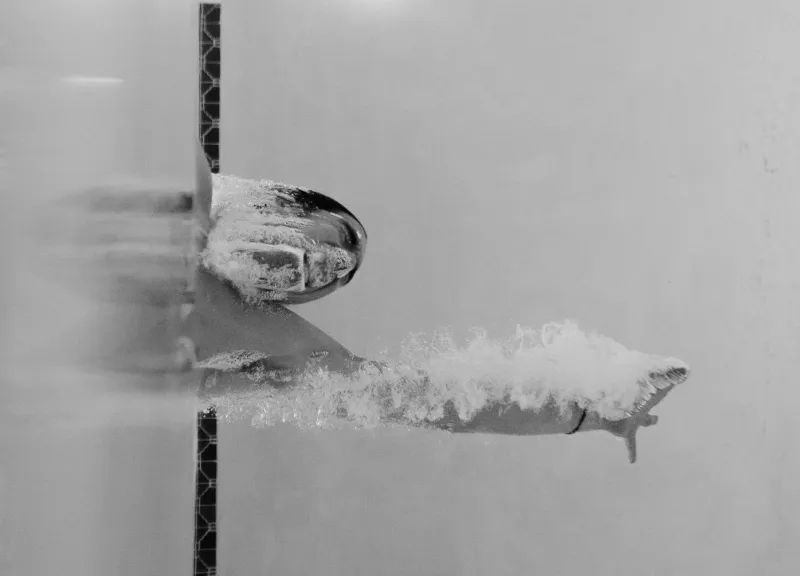
Let's start with swimming, because the water makes everything more unforgiving. Unlike air, water is roughly 800 times denser, which means even minor positional inefficiencies get punished almost immediately. What aerodynamics engineers call the "frontal cross-section" — the amount of body surface you're presenting to the medium you're moving through — applies just as brutally underwater as it does on a bike.
Here's where shoulders come in. Elite swimmers don't just rotate their torsos to reduce drag; they actively narrow their shoulder profile during the entry phase of each stroke. High-speed analysis of top-tier freestyle swimmers reveals that the leading shoulder drops inward by anywhere from 8 to 15 degrees relative to the waterline during hand entry. That's not accidental. It's a trained movement pattern that reduces the effective width of the body punching through the water.
The athletes who finish fourth? Their shoulder entry is often just 3 to 5 degrees off that sweet spot. That's it. You'd never see it watching from the bleachers. But over 100 meters, that small angular difference compounds into a drag penalty that can cost a swimmer two-tenths of a second — which, at the Olympic level, is basically an eternity.
Hip Angle and the Track Sprint Puzzle
Move over to the track, and the geometry gets even more nuanced. Sprinters have been studied obsessively for decades, but sports scientists say there's still a widely misunderstood relationship between hip angle and top-end speed.
During maximum velocity sprinting — the phase roughly between 60 and 80 meters in a 100m race — the angle of forward lean from the hip joint plays a critical role in both aerodynamics and power transfer. Too upright, and you're presenting more frontal area to the air. Too far forward, and your stride mechanics break down. The elite window is surprisingly narrow: somewhere between 5 and 8 degrees of forward inclination from vertical, measured at the hip.
"We see a lot of athletes who are phenomenally strong, phenomenally conditioned, but they're running slightly too tall," explains Marcus Okafor, a sprint coach who has worked with collegiate and professional track athletes across the Southeast. "A two-degree correction in hip position can change how much air resistance they're fighting without them even feeling like they've changed anything."
The head is part of this equation too. A chin that juts forward — a common stress response during a hard effort — actually shifts the athlete's center of gravity backward and increases their effective frontal profile. The best sprinters in the world run with a remarkably neutral neck position, chin slightly tucked, gaze directed maybe 20 to 30 feet ahead rather than straight at the finish line. It looks calm. It's anything but accidental.
Cycling: Where Millimeters Become Minutes
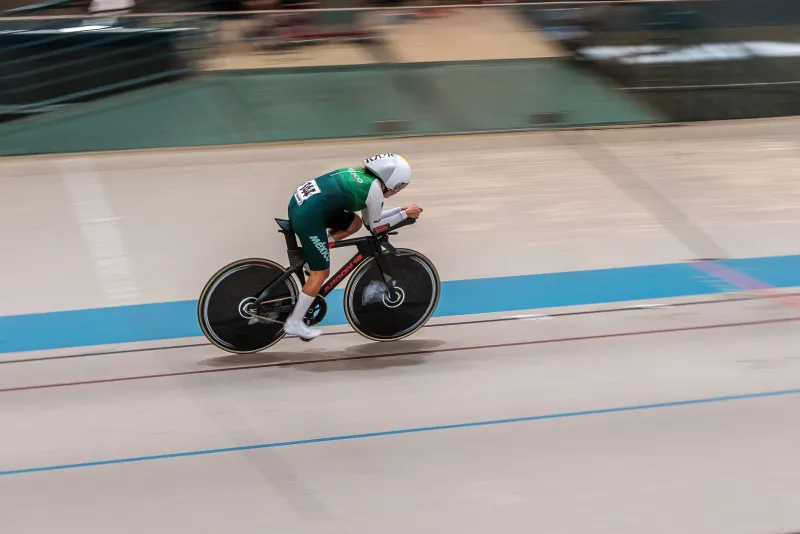
If swimming and track are where body geometry matters, cycling is where it becomes an outright obsession. The reason is simple: at race speeds, aerodynamic drag accounts for roughly 70 to 90 percent of the total resistance a cyclist is fighting. Shave drag, and you shave time — sometimes a lot of it.
The professional peloton has access to sophisticated wind tunnel testing, and the data that comes out of those sessions is eye-opening. A rider's elbow width, for instance, can shift their drag coefficient meaningfully. Riders who rest on their forearms with elbows flared outward — a natural, comfortable position — can generate measurably more drag than those who bring their elbows in to roughly shoulder width or slightly narrower.
But here's the wrinkle: the optimal position for aerodynamics isn't always the optimal position for power output. If you collapse your elbows too far inward, your hip angle changes, which affects how effectively your glutes and quads fire. Sports scientists call this the "aero-power tradeoff," and finding the individual sweet spot for each athlete requires testing that most people simply don't have access to.
What separates Olympic-level cyclists from very good amateurs often comes down to how well they've dialed in that tradeoff — and how consistently they can hold that position when they're deep in the pain cave on the final climb.
Why Most Athletes Never Hear About This
So if this information exists, why isn't it showing up in every high school and college program in the country? A few reasons.
First, this kind of analysis requires slow-motion video, force plates, and sometimes wind tunnel access — resources that are expensive and not evenly distributed across American sports programs. Second, the adjustments are so subtle that they're genuinely hard to coach with the naked eye. And third, there's a persistent belief in grassroots sports culture that conditioning and willpower are the primary levers. They matter enormously, obviously. But they're not the whole picture.
The good news is that the tools for this kind of analysis are getting cheaper and more accessible. Apps that can do basic slow-motion video capture are already in everyone's pocket. Wearable sensors that track joint angles in real time are coming down in price. And sports scientists who specialize in biomechanics are increasingly available to programs that previously couldn't have afforded their expertise.
The Geometry of Fast
Speed isn't just about how hard you work. It's also about the shape you make while you're doing it. The athletes who stand on Olympic podiums have, almost universally, figured out — through years of coaching, analysis, and refinement — how to minimize the surface they present to the medium they're moving through while maximizing the mechanical efficiency of every movement.
The margin between them and the athlete in fourth place might be invisible to most fans. But to the engineers and scientists who study this stuff, it's written clearly in the angles. Every degree counts. Every centimeter of frontal profile tells a story.
And somewhere right now, there's an athlete who has the fitness to medal but hasn't yet found the geometry to get there. That's the part of the race nobody sees — and it might be the most important part of all.