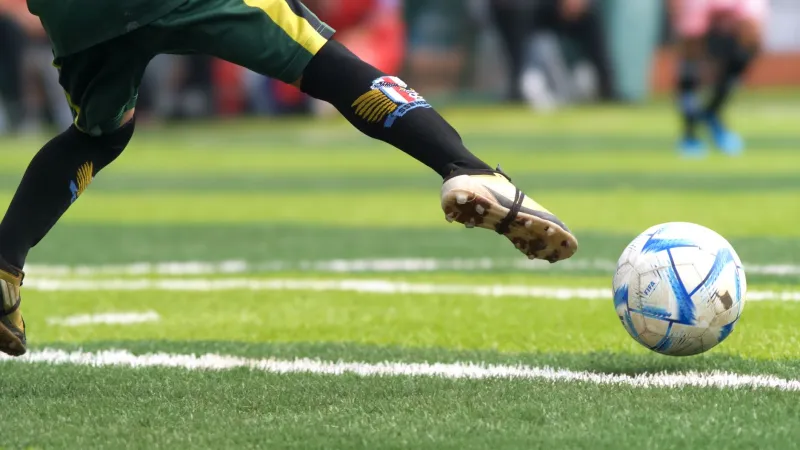
Down to the Lace: The Microscopic Gear Obsession Quietly Separating Pro Athletes From Everyone Else
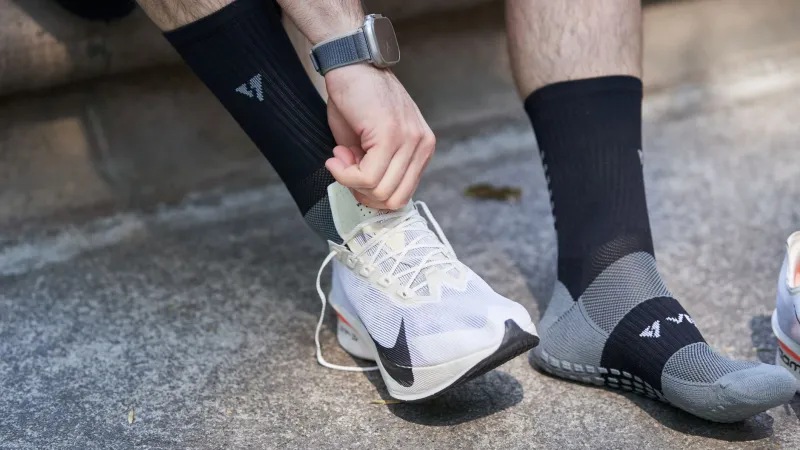
The sneaker gets the spotlight. The jersey gets the commercial. But if you want to find where pro sports equipment science is actually moving the needle right now, you need to look further down — past the ankle, past the heel counter, all the way to the sock and the lace.
It sounds absurd until you hear the numbers. And once you hear the numbers, it's hard to think about athletic gear the same way again.
The Marginal Gains Mindset Goes Mainstream
The concept of marginal gains — the idea that stacking small improvements across many variables produces outsized results — became part of mainstream sports vocabulary through cycling, specifically through the dominance of British Cycling and Team Sky over the past decade and a half. The story of optimizing everything from pillow firmness to hand-washing technique became a kind of performance philosophy shorthand.
What's happened since is that the marginal gains lens has migrated into virtually every professional sport in America. NBA equipment managers, NFL performance staffs, and MLB training departments all now operate with some version of this framework. And the frontier they've landed on — the place where there's still measurable gain available that hasn't been fully engineered yet — is the interface between the athlete's foot and the ground.
Specifically: what's between the foot and the shoe, and how the shoe is secured to the foot.
What Sock Technology Actually Does to Performance
The casual athlete buys socks based on thickness preference and whether they bunch at the heel. The professional athlete's sock choice is informed by compression mapping data, moisture transport rate testing, and friction coefficient analysis.
Those aren't marketing terms. They're actual measurement categories that equipment labs at companies like Nike, Balega, and Drymax use to evaluate performance sock construction.
Here's why each matters:
Compression mapping refers to how pressure is distributed across the foot during dynamic movement. A sock with graduated compression — tighter at the arch, slightly looser at the ankle — keeps the foot's internal structures more stable during lateral cuts and explosive push-offs. That stability reduces micro-movement inside the shoe, which reduces energy lost to friction and improves force transfer to the ground. Independent testing on compression sock designs has shown reductions in muscle oscillation (the jiggling of soft tissue during impact) that correlate with reduced fatigue accumulation over the course of a game.
Moisture transport rate is the speed at which sweat moves away from the skin surface. This matters aerodynamically in a less obvious way: wet socks increase the effective weight on the foot (marginally, but measurably), change the friction characteristics between foot and insole, and alter how the foot sits in the shoe during competition. Elite runners have described the sensation of wet socks as creating a "slip" effect that disrupts their push-off timing. Modern performance socks use hydrophilic fiber blends — often merino wool combined with synthetic wicking materials — to move moisture outward fast enough that the foot surface stays effectively dry even in high-sweat conditions.
Friction coefficient at the sock-insole interface affects how much the foot slides inside the shoe during direction changes. Too much friction and you get blister risk and restricted foot movement. Too little and the foot slips, costing milliseconds on every cut. The sweet spot is sport-specific — a basketball player needs different sock-insole friction characteristics than a tennis player, whose movement patterns create different lateral shear forces.
The Lacing Revolution That Almost Nobody Noticed
Shoe lacing is older than modern sport. It's also, as it turns out, a biomechanical variable with more performance implications than most athletes have ever considered.
The standard criss-cross lace pattern most of us learned as kids distributes tension relatively evenly across the shoe's upper. That even distribution is fine for walking. For high-performance sport, it's a compromise.
Equipment scientists at several major footwear brands have developed sport-specific lacing systems — some baked into the shoe's construction, others offered as lacing guides to professional athletes — that create differentiated tension zones across the upper. The goal is to lock the heel firmly while allowing the forefoot to flex naturally during toe-off.
When the heel is inadequately secured, it lifts slightly inside the shoe during push-off. That heel lift represents wasted energy — force that should be driving you forward is instead moving your foot within the shoe. Studies on running economy have quantified this effect, showing that heel slip of even 2-3 millimeters per stride compounds into meaningful energy expenditure over the course of a competition.
Several NBA teams now have equipment staff members who are specifically trained in foot-lacing protocols and work with players individually to dial in their shoe fit before each game. The same practice has taken hold in elite tennis, where the lateral demands on footwear are particularly intense.
What the Equipment Scientists Are Actually Saying
The people building this gear are careful about overpromising, but the directional consensus is consistent: the foot-ground interface is the last major frontier in athlete equipment optimization.
The logic tracks. Helmet technology, jersey aerodynamics, and shoe cushioning have all been heavily engineered for decades. The sock and lacing system — by contrast — remained largely unchanged in professional sports until recently. That means there's still relatively accessible performance gain available there compared to, say, trying to squeeze another tenth of a percent of efficiency out of an already highly optimized running shoe midsole.
What's particularly interesting is the interaction effect. A high-performance sock paired with an optimized lacing pattern produces a combined improvement in foot stability and moisture management that neither delivers independently. Equipment scientists describe this as a "system effect" — the components are interdependent, and testing them in isolation undersells what they do together.
What This Means If You're Not a Pro
The honest answer is that most recreational athletes won't notice the difference between a $12 athletic sock and a $28 performance sock in a single workout. The gains at that level of competition are real but subtle.
But here's what's worth taking from the professional level: the principle of foot-ground interface optimization applies regardless of your sport or competitive level. Making sure your heel is locked in your shoe, that your sock isn't bunching or sliding, and that moisture isn't building up between your foot and insole — these are free performance variables that most amateur athletes ignore completely.
The pros are just taking those same principles and engineering them to a degree that produces measurable data. The underlying logic is available to anyone willing to pay attention to what's happening from the ankle down.
Next time you're gearing up for a game or a race, maybe spend sixty seconds on your laces instead of just pulling them tight and calling it done. The pros certainly are.